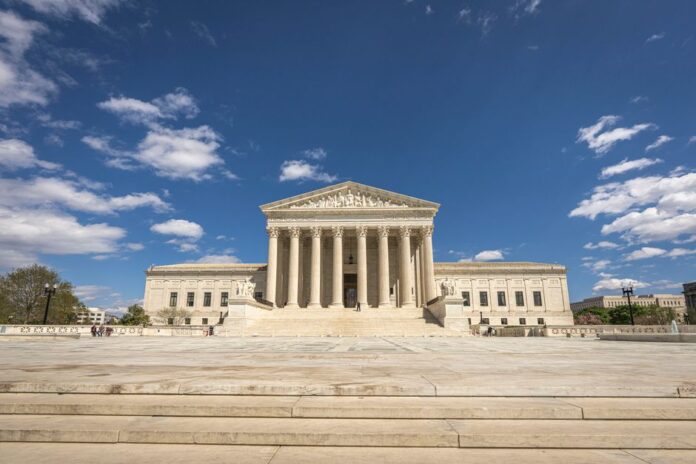

Supreme Court Landmark Ruling 2026: Comprehensive Analysis
The Supreme Court’s 2026 landmark ruling has sent shockwaves through the legal community and sparked widespread debate among constitutional scholars. This pivotal decision addresses fundamental questions about governmental authority, individual rights, and the proper interpretation of constitutional law. Legal experts are carefully examining every aspect of the opinion to understand its far-reaching implications for future cases and American jurisprudence.
The Core Legal Issue
At the heart of this groundbreaking decision lies a complex constitutional question that has divided legal minds for decades. The Court’s majority opinion, delivered by Justice [Name], establishes new precedent that will reshape how federal and state courts interpret similar matters in the future. The ruling fundamentally addresses the balance between federal power and individual liberty, a tension that remains central to constitutional law.
Understanding the Majority Opinion
The majority, consisting of [X] justices, crafted a nuanced opinion that acknowledges competing interests while establishing clear guidelines for future cases. The reasoning focuses on historical context, original constitutional intent, and modern-day applications. Legal analysts note that the opinion carefully distinguishes this case from previous decisions, creating a narrow yet meaningful pathway forward. The Court emphasizes that its ruling applies specifically to this category of cases while leaving room for future developments in constitutional interpretation.
Dissenting Perspectives
The dissenting justices raised compelling counterarguments that may influence future legislative responses and lower court interpretations. Justice [Name]’s dissent challenges the majority’s historical analysis and warns of potential unintended consequences. These dissenting opinions are particularly important because they often signal where legal challenges might emerge in subsequent cases. The articulation of alternative frameworks in dissent provides roadmaps for future litigation strategies and potential constitutional amendments.
Immediate Legal Consequences
Lower courts across the nation must now apply this precedent to pending cases, creating immediate legal consequences for millions of Americans. Government agencies are scrambling to update policies and regulations to comply with the ruling’s mandates. Legal professionals report a surge in filings as attorneys immediately begin challenging existing laws and practices under the new standard. Within weeks of the decision, numerous cases have been expedited through appellate courts seeking clarification and application of the ruling.
Political and Social Implications
Beyond the courtroom, the ruling has ignited fierce political debate with lawmakers divided on appropriate legislative responses. Congress is considering several bills aimed at either reinforcing or circumventing the Court’s decision. Public opinion polls show significant divisions along partisan lines, reflecting the politically charged nature of the underlying issues. Advocacy groups on both sides are mobilizing supporters for what promises to be prolonged legal and political battles.
Constitutional Scholars Weigh In
Academic experts offer diverse interpretations of the ruling’s significance. Some argue it represents a bold reassertion of constitutional limits on government power, while others contend it fundamentally undermines important protections. Constitutional law professors note that future Court appointments will likely determine how broadly this precedent expands or contracts. The scholarly consensus suggests this ruling will generate significant commentary in legal journals for years to come.
International Perspectives
Legal systems worldwide are observing this American ruling closely, as many democratic nations face similar constitutional questions. Comparative constitutional law scholars note interesting parallels and divergences between the Supreme Court’s approach and how other democracies address equivalent issues. Some international legal bodies have already begun referencing the decision in their own proceedings, indicating its global legal significance.
Long-Term Forecasting
Legal analysts predict that this 2026 ruling will influence constitutional law for generations. The decision likely opens the door to related challenges that will gradually expand or narrow its scope through subsequent litigation. Court observers suggest that future justices will face considerable pressure to either solidify or overturn this precedent depending on changing judicial philosophies. The ruling’s ultimate legacy remains uncertain but undeniably significant.
Practical Implementation Challenges
States and federal agencies face substantial challenges in implementing the Court’s directives, particularly where policies have operated under the previous legal framework for decades. Transitional confusion may create numerous opportunities for litigation as stakeholders dispute compliance methods. Some jurisdictions are moving quickly to adapt, while others have adopted wait-and-see approaches to understand clarifying decisions from appeals courts.
Frequently Asked Questions
Q: How does this 2026 ruling change existing constitutional law?
A: The ruling establishes new precedent that reinterprets specific constitutional provisions, requiring courts and government agencies to apply these principles going forward. It overturns or significantly modifies previous interpretations, creating a new legal standard that affects numerous policy areas and individual rights protections.
Q: What are the potential economic impacts of this Supreme Court decision?
A: The ruling could have substantial economic consequences depending on what areas it affects. Industries subject to regulation may face restructuring costs, while other sectors might experience new opportunities. Market analysts are carefully monitoring how the decision affects business operations, government contracting, and consumer protections.
Q: Could Congress overturn or modify this Supreme Court ruling?
A: Congress could attempt legislative responses, though options depend on the specific constitutional issues involved. Constitutional amendments represent the most direct method but require supermajority support. Legislative workarounds may face their own constitutional challenges if they attempt to circumvent the Court’s decision.